When pet owners consider their furry friends' diets, questions arise. One common inquiry is, "what is the difference between dog food and cat food?" At first glance, the two may seem similar, but they cater to very different nutritional needs. Dogs are omnivorous and thrive on a varied diet of proteins, grains, and vegetables. In contrast, cats are obligate carnivores, requiring a diet high in animal proteins.
Understanding these differences is crucial for pet health. For instance, adding too much carbohydrate to cat food could lead to health issues. Moreover, some ingredients in dog food may not be safe for cats. This raises awareness about reading labels and understanding what pets truly need. Each type of food has unique formulations, and it's essential to question common assumptions.
In some cases, pet owners may mistakenly share food or treat their pets with leftovers. This can lead to unbalanced diets, reflecting a need for better awareness. Recognizing the fundamental differences not only helps in feeding effectively but also promotes long-term well-being. As we dive deeper into this issue, it becomes clear that knowledge about pet nutrition is essential for responsible pet ownership.
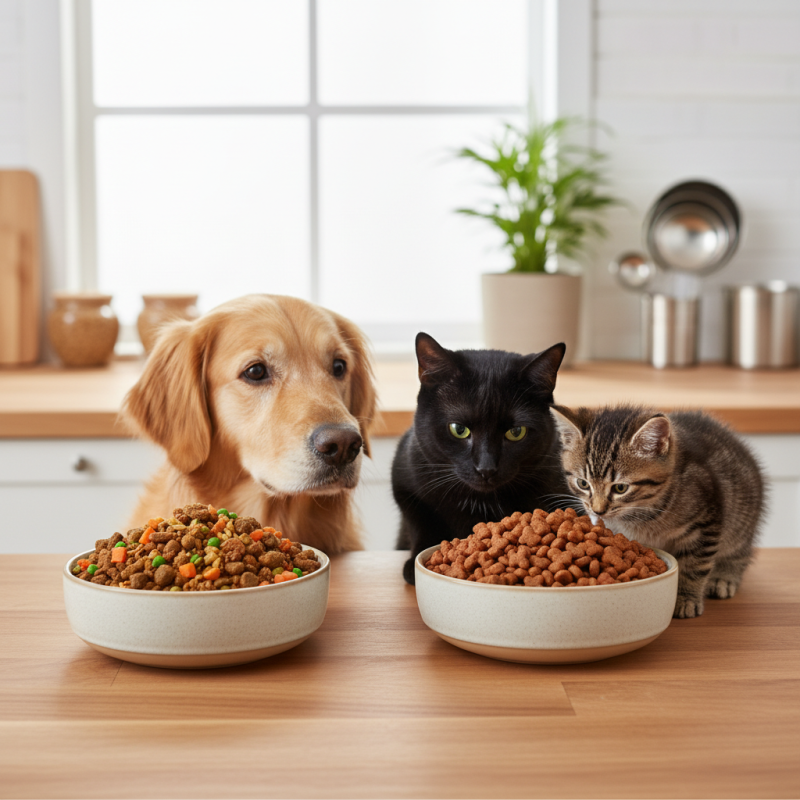
Nutritional Requirements for Dogs vs. Cats
Dogs and cats have different nutritional requirements. Dogs are omnivores. They thrive on a varied diet. Cats are obligate carnivores. They need meat for essential nutrients.
Dogs require protein, fats, carbohydrates, vitamins, and minerals. Protein sources can include meat, fish, and legumes. Cats need more protein. Their bodies are designed to use protein efficiently. A cat’s diet must include taurine, an amino acid found in meat.
Water is crucial for both. Dogs can drink from bowls, while cats may prefer running water. Keep an eye on hydration. Also, consider individual needs. A dog's age, activity level, and health status affect their diet. Cats can be finicky and may reject certain foods. Always pay attention to their behavior and preferences.
Nutritional Requirements Comparison: Dog Food vs Cat Food
Key Ingredients in Dog Food
Choosing the right food for your dog involves understanding key ingredients. Dog food typically contains a mix of proteins, carbohydrates, fats, vitamins, and minerals. The protein sources often include chicken, beef, and fish. These proteins help support muscle growth and energy levels.
When looking at carbohydrates, dog food may include grains like rice or corn. However, some dog owners prefer grain-free options. Fats, such as omega-3 and omega-6, are crucial. They promote healthy skin and shiny coats. Some formulas may also add fruits and vegetables for additional nutrients.
Tips:
Always check the label for ingredient quality. Look for whole meats rather than meat by-products. Remember, food should not resemble junk. Dogs thrive on a balanced diet.
Many dog owners overlook
portion control. Too much food can lead to obesity. Be mindful of feeding guides on the packaging. Adjust these based on your dog's activity level. Keep a close eye on your pet’s weight and health. Small adjustments can make a big difference.
Key Ingredients in Cat Food
When it comes to cat food, understanding the key ingredients is essential. Cats have unique nutritional requirements. Unlike dogs, they are obligate carnivores. This means their diet relies heavily on animal-based proteins. According to the Association of American Feed Control Officials (AAFCO), a quality cat food should contain at least 26% protein.
Key ingredients often include meat, fish, and poultry. These protein sources are vital for developing strong muscles and maintaining a healthy immune system. Cats also need taurine, an amino acid found in animal tissues. A deficiency in taurine can lead to serious health issues. Some reports suggest that a lack of taurine in the diet can lead to heart disease in cats.
Tips: Always check the ingredient list. Look for meat as the first ingredient. Avoid fillers like corn and wheat.
Fats and carbohydrates are also important in cat food. Healthy fats provide energy and help with nutrient absorption. However, too much fat can lead to obesity. Carbohydrates are not a primary energy source for cats, yet some levels are necessary for balanced nutrition. It's essential to balance these elements.
Some cat owners might overlook the importance of moisture. Cats have a low thirst drive. Feeding wet food can keep them hydrated. A report from the Veterinary Journal mentions that hydration plays a crucial role in preventing urinary tract issues. Consider incorporating wet food into their diet.
Potential Health Implications of Feeding Dogs Cat Food
Pet owners often wonder if they can feed their dogs cat food. Both types of food cater to different dietary needs. Dogs are omnivores, while cats are obligate carnivores. This difference affects nutrient content. High protein levels in cat food can cause issues for dogs over time.
Feeding dogs cat food may lead to serious health implications. Dogs may experience digestive problems. In some cases, this can result in diarrhea or vomiting. Additionally, the excess protein can strain their kidneys. Long-term consumption could potentially lead to renal failure.
It's essential to recognize these risks. Some owners may think feeding cat food is fine for short periods. However, this can disrupt the unique dietary needs of dogs. A balanced diet is crucial for their health. Not all food is suitable for every pet. Understanding the differences in pet nutrition is vital.
Common Myths about Dog and Cat Food Differences
When it comes to dog food and cat food, there are several common myths. One prevalent belief is that all pet food is the same. In reality, dogs and cats have different nutritional needs.
Dogs are omnivores, while cats are obligate carnivores. This means that cats require certain nutrients that only come from animal sources. The protein content in cat food is typically much higher than that in dog food.
Another myth is that feeding pets the same food is good enough. Some owners think that sharing food is harmless. However, it can lead to health issues.
Dogs digest food differently than cats. For example, cat food often contains more fat and fewer carbohydrates. Feeding a dog cat food occasionally might not seem dangerous, but it can upset their digestive system.
Pet owners often overlook the importance of tailored nutrition. Just because a pet loves certain food doesn’t mean it’s right for them. An experiment should be conducted when switching foods. Owners should observe any changes in behavior or health.
Finding the right diet for each pet requires trial and error. Every animal is unique, and what works for one might not work for another.
FAQS
: Dogs need protein, fats, carbohydrates, vitamins, and minerals. Their diet can include meat, fish, and legumes.
Cats require a higher protein intake. Their diet should consist of at least 26% protein from animal sources.
Taurine is an essential amino acid found in meat. A deficiency can lead to serious health problems, like heart disease.
Follow feeding guides on food packaging, adjusting them according to your dog's activity level and health status.
Look for whole meats, not by-products. Avoid junk-like fillers. Quality ingredients support health and energy levels.
Cats may prefer wet food for hydration. Monitor their water intake to prevent urinary issues.
Carbohydrates are not primary for cats, but some amount is needed for balanced nutrition.
Healthy fats, like omega-3 and omega-6, support skin health and coat shine.
Yes, cats can reject certain foods. Observe their behavior and preferences closely.
Some owners prefer grain-free for allergies or sensitivities. Individual dog needs vary.
Conclusion
In examining what is the difference between dog food and cat food, it is essential to recognize the distinct nutritional requirements of these two species. Dogs are omnivorous and require a balanced diet with various nutrients, while cats are obligate carnivores, needing higher levels of protein and specific amino acids like taurine, which are crucial for their health. Consequently, the key ingredients in dog food typically include grains, vegetables, and meats, whereas cat food often contains a higher concentration of meat-based ingredients.
Feeding dogs cat food can lead to potential health issues, such as obesity and nutritional deficiencies, due to the imbalance in nutrients. Additionally, there are common myths surrounding the similarities between the two types of food, which can mislead pet owners. Understanding these differences is vital for ensuring the well-being of both dogs and cats, allowing for better dietary choices tailored to their specific needs.

 Petra Pet