The question “is raw pet food safe for dogs and cats” deserves a careful, evidence-based answer. Raw diets may provide appealing ingredients, visible meat, and strong owner involvement. However, safety depends on sourcing, formulation, temperature control, and household hygiene. There is no universal safety guarantee.
The U.S. Food and Drug Administration’s raw pet food sampling study tested 196 products. Salmonella appeared in 15 samples, while Listeria monocytogenes appeared in 32 samples (FDA, 2010). These findings show that contamination can exist before the food reaches a pet’s bowl. The Centers for Disease Control and Prevention also warns that raw pet food may expose animals and people to harmful bacteria. Children, older adults, pregnant people, and immunocompromised family members face greater concern. Small details matter. A thawing package can drip across a refrigerator shelf.
Still, risk is not the same as certainty. Commercial manufacturers may use pathogen testing, controlled processing, sealed packaging, and strict cold-chain procedures. Reliable products should also meet nutritional standards, not simply contain raw meat. The World Small Animal Veterinary Association emphasizes complete, balanced nutrition and professional diet assessment. FEDIAF’s Nutritional Guidelines provide practical nutrient targets for formulated pet foods. Yet these guidelines do not make every homemade raw recipe complete or safe. That is the uncomfortable part. Good intentions cannot replace validated controls. This article examines when raw feeding may be managed responsibly, which warning signs deserve attention, and why veterinary guidance remains essential for dogs, cats, and the people sharing their homes.
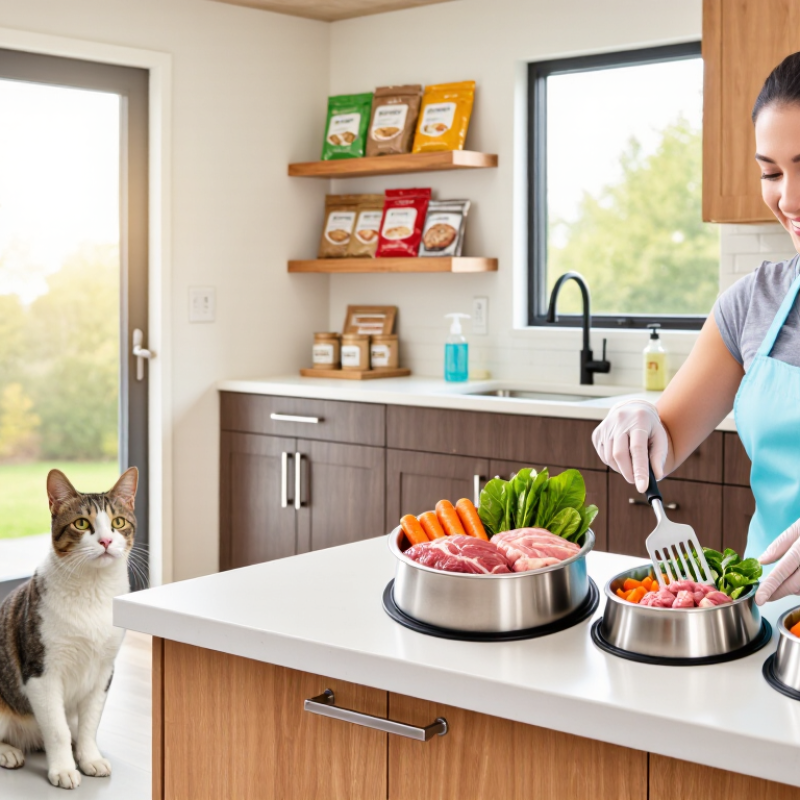
Raw pet food means uncooked animal ingredients, such as meat, organs, edible bone, and selected supplements. It is not automatically sterile or nutritionally complete. Freezing may reduce some parasites, but it does not reliably eliminate Salmonella or Listeria. Preparation therefore matters as much as the recipe.
A controlled process starts with traceable ingredients and a continuous cold chain. Meat should remain chilled during transport and storage. Grinding increases surface exposure, so equipment must be cleaned and disinfected after every batch. Reliable producers also use pathogen testing and documented hazard-control procedures. That step is often overlooked. FEDIAF’s nutritional guidelines stress that complete diets must provide balanced energy, minerals, vitamins, and essential amino acids for each life stage. A homemade mixture can look fresh yet still lack taurine, calcium, or suitable vitamin levels.
The FDA’s 2015 survey found Salmonella in 15 of 196 raw pet food samples and Listeria monocytogenes in 32 samples. These findings do not prove every raw diet is unsafe. They do show that contamination is a measurable risk. At home, thaw food in a sealed container, not on the counter. Wash hands, bowls, and surfaces immediately. Keep raw food separate from family meals. Children, older adults, pregnant people, and immunocompromised individuals need extra caution. Veterinary nutrition advice is valuable, especially for growing animals. Raw feeding can be carefully managed, but it is not risk-free. That distinction matters.
Raw diets can offer dense, recognizable nutrition when they are carefully formulated. Muscle meat supplies complete animal proteins and essential amino acids. Organ meats provide vitamin A, iron, copper, and several B vitamins. Natural fats support skin, coat, and energy needs. Many pets also receive more moisture from fresh, uncooked ingredients.
That does not make every raw meal nutritionally complete. Calcium and phosphorus must stay balanced for healthy bones and teeth. Taurine is especially important for cats, while growing puppies need precise mineral ratios. A veterinary nutritionist can assess the recipe, life stage, body condition, and medical history. Small details matter. Too much liver, for example, may create a vitamin imbalance.
Safety depends on more than the ingredients. I have learned that clean preparation is essential. Use separate utensils, wash hands, thaw food in the refrigerator, and discard leftovers promptly. Raw diets can carry harmful bacteria, even when the food looks fresh. Dogs and cats may tolerate some microbes better than people, but they can still become ill or spread contamination. Children, older adults, pregnant people, and immunocompromised family members need extra protection. I would not call raw feeding risk-free. Its potential benefits are real, but they depend on evidence-based formulation, careful storage, and regular veterinary monitoring.
Raw pet food can be safe when ingredients and handling follow strict controls. But safe is not automatic. Ingredients from approved suppliers, a reliable cold chain, and batch-level pathogen testing are essential. A 2014 FDA Center for Veterinary Medicine survey tested 196 raw pet-food samples. Salmonella appeared in 15 samples, while Listeria monocytogenes appeared in 32. These findings show why safety depends on controls, not smell or appearance. A hygienic recipe can still be nutritionally incomplete.
At home, thaw raw food in a refrigerator below 4°C. Keep it away from human food and children’s reach. Wash hands with soap for at least 20 seconds after serving. Clean bowls, counters, and utensils immediately. Cross-contamination can happen through a knife, towel, or refrigerator handle. The CDC warns that raw pet food may expose pets and people to harmful germs. Households with infants, older adults, pregnant people, or weakened immune systems need extra caution. Small details matter.
Tips: Choose food with clear sourcing, storage instructions, and nutritional adequacy statements. Use dedicated utensils when possible. Disinfect preparation surfaces after every meal. Refrigerate leftovers quickly, and discard uneaten food after two hours. Do not trust one negative laboratory result as proof of zero risk; sampling can miss uneven contamination. Veterinary guidance is useful when a pet has digestive disease or unusual health needs.
| Safety Dimension | Relevant Fact | Recommended Control | Health Risk Reduced | Practical Safety Level |
|---|---|---|---|---|
| Ingredient sourcing | Raw meat and animal products can carry pathogens such as Salmonella, Listeria monocytogenes, Campylobacter and certain strains of Escherichia coli. | Use ingredients from inspected, traceable suppliers with documented cold-chain and sanitation controls. | Reduces the likelihood of contaminated ingredients entering the preparation area. | Risk depends on sourcing |
| Cold storage | Refrigeration slows the growth of many bacteria but does not sterilize raw food. | Keep food at or below 4°C (40°F), follow the stated use-by date, and refrigerate promptly after purchase or preparation. | Limits bacterial multiplication during storage. | Effective control |
| Freezing | Freezing can reduce the growth of microorganisms, but it does not reliably kill all bacteria, viruses or parasites. | Use freezing as a storage measure, not as a substitute for hygienic sourcing, sanitation or cooking. | Reduces spoilage and slows microbial growth while food remains frozen. | Partial control |
| Thawing method | Room-temperature thawing can allow the outer surface to enter a temperature range where bacteria multiply more quickly. | Thaw sealed portions in the refrigerator or use another controlled method recommended by food-safety authorities. | Reduces bacterial growth and liquid contamination on counters. | Effective control |
| Hand and surface hygiene | Pathogens from raw animal products can spread to hands, bowls, utensils, counters and other foods. | Wash hands with soap and water after handling; clean and disinfect surfaces, utensils and feeding bowls after every meal. | Reduces cross-contamination and exposure of people and pets to pathogens. | Essential control |
| Portion handling | Small portions thaw more quickly and are less likely to remain at unsafe temperatures for extended periods. | Prepare single-meal portions, keep unused food refrigerated, and discard leftovers that have been left out for too long. | Limits time-temperature abuse and repeated handling. | Practical control |
| Feeding-bowl management | Food residue and moisture can support microbial survival on bowls and feeding surfaces. | Use washable bowls, remove uneaten food promptly, and wash bowls after each feeding. | Reduces re-exposure from contaminated feeding equipment. | Effective control |
| Nutritional completeness | A raw diet is not automatically nutritionally complete. Calcium, phosphorus, vitamins, trace minerals and essential fatty acids must be appropriately balanced. | Choose a diet formulated to meet recognized nutritional standards or obtain advice from a qualified veterinary nutrition professional. | Reduces risks of bone disease, nutrient deficiencies, excesses and poor growth. | Formulation dependent |
| Bone safety | Raw bones may cause dental fractures, choking, gastrointestinal obstruction or injury. Cooked bones are especially hazardous because they can splinter. | Avoid cooked bones and select only materials appropriate for the animal’s size and chewing behavior; veterinary guidance is advisable. | Reduces mechanical injury and digestive obstruction risks. | Requires supervision |
| Animal age and health | Puppies, kittens, older animals and pets with weakened immune systems may be less able to tolerate infectious or nutritional hazards. | Discuss raw feeding with a veterinarian before use in vulnerable animals or animals with chronic disease. | Reduces the chance of severe illness in higher-risk pets. | Veterinary review advised |
| Household vulnerability | Young children, older adults, pregnant people and immunocompromised individuals may face greater consequences from foodborne pathogens. | Consider a cooked or commercially sterilized alternative when vulnerable people share the household, and maintain strict hygiene if raw food is used. | Reduces the potential for household transmission. | Higher household concern |
| Veterinary monitoring | Changes in stool, vomiting, weight, coat quality or energy can indicate infection, intolerance or nutritional imbalance. | Monitor the pet regularly and seek veterinary care for persistent gastrointestinal signs, lethargy, fever or weight loss. | Supports early detection of diet-related health problems. | Recommended practice |
Important: Raw pet food is not inherently risk-free. Safety depends on ingredient quality, temperature control, hygiene, nutritional balance and the health of the pet and household. Proper handling can reduce risk, but it cannot guarantee elimination of pathogens.
Raw pet food is not automatically safe. Its safety depends on food quality, hygiene, and storage discipline. The U.S. Food and Drug Administration tested 196 raw pet food samples and found Salmonella in 15 samples and Listeria monocytogenes in 32. These findings show that contamination can occur even before food reaches a household. High-quality ingredients help, but quality alone cannot remove every pathogen.
Use meat from controlled, traceable sources, and keep raw food separate from family groceries. Wash hands, bowls, knives, and counters after preparation. The Centers for Disease Control and Prevention warns that raw pet food can expose animals and people to harmful bacteria. Puppies, older pets, pregnant people, and immunocompromised family members require extra caution. I have found that small routines matter more than confident assumptions. One missed surface can undo careful preparation.
Tips: Keep raw food frozen until needed. Thaw it in a sealed container inside the refrigerator. Do not thaw it on the counter. Serve only the amount your pet can finish quickly, then refrigerate leftovers promptly. The U.S. Department of Agriculture recommends limiting perishable food at room temperature to two hours. Store chilled food below 40°F (4°C), and discard food with unusual odor, texture, or packaging damage. The World Small Animal Veterinary Association also notes that raw diets carry pathogen risks and may become nutritionally unbalanced without expert formulation. Safety is possible, but it is never effortless.
The role of food quality, hygiene, and proper storage
Evidence snapshot: In an FDA survey of 196 raw dog and cat food samples, 7.7% tested positive for Salmonella and 16.3% tested positive for Listeria monocytogenes. These findings show that raw food is not automatically pathogen-free; safety depends on product quality, hygienic handling, and temperature control.
Source: U.S. Food and Drug Administration, “Get the Facts: Raw Pet Food Diets Can Be Dangerous to You and Your Pet.”
Raw pet food can be safe when its ingredients, nutrition, and handling are carefully controlled. However, “natural” does not mean risk-free.
In an FDA survey of 196 raw pet food samples, 15 contained Salmonella and 32 contained Listeria monocytogenes. That equals about 7.7% and 16.3%, respectively. These findings show why veterinary guidance matters before changing a dog’s or cat’s diet.
A veterinarian should assess age, body condition, medical history, and household risks.
Puppies, kittens, pregnant animals, and pets with weak immune systems need extra caution.
A veterinary nutritionist can check calcium, phosphorus, essential fatty acids, taurine, and calorie levels.
Small imbalances may remain invisible for months. Then bones, growth, or organ function can become concerns.
Handling matters too.
Store raw food below 4°C, thaw it in a sealed container, and wash hands after preparation. Clean the feeding bowl promptly.
The Centers for Disease Control and Prevention warns that contaminated pet food can expose both animals and people, especially children and older adults.
The uncomfortable truth is that careful owners still make mistakes. A dropped spoon, a warm refrigerator shelf, or a shared cutting board can change the risk quickly.
Raw feeding should therefore be monitored, not assumed safe. Regular weight checks, stool observations, and veterinary reviews help identify problems early.
It may contain uncooked meat, organs, edible bone, and selected supplements. It is not automatically sterile. It may also lack complete nutrition.
No. Freezing may reduce some parasites, but it does not reliably eliminate certain bacteria. Cold storage is useful. It is not a complete safety solution.
Thaw it in a sealed container inside a refrigerator below 4°C. Never thaw it on the counter. Keep it away from family groceries.
Wash hands with soap for at least 20 seconds after serving. Clean bowls, knives, counters, and utensils immediately. A refrigerator handle can spread contamination.
Keep it out for no more than two hours. Refrigerate leftovers quickly. Discard food with damaged packaging or unusual texture.
Not always. A homemade mixture may lack taurine, calcium, vitamins, or essential amino acids. Fresh-looking food can still be incomplete. Expert formulation is safer.
Households with young children, older adults, pregnant people, or weakened immune systems need stronger precautions. Puppies and pets with health problems also need careful guidance. Small details matter.
Choose traceable ingredients, clear storage directions, and a nutritional adequacy statement. Reliable preparation includes cold-chain control and pathogen testing. One negative test does not prove zero risk.
Is raw pet food safe for dogs and cats? It can be a suitable dietary option when it is carefully formulated, responsibly prepared, and handled with strict hygiene. Raw pet food generally contains uncooked meat, organs, edible bones, and sometimes other animal-based ingredients selected to provide protein, fats, vitamins, and minerals. A well-balanced raw diet may support healthy muscles, energy levels, skin, and coat, but its nutritional value depends on using safe, high-quality ingredients in correct proportions.
Food safety is essential because raw ingredients can carry harmful microorganisms if they are contaminated or stored incorrectly. Owners should use clean equipment, prevent cross-contamination, wash hands and surfaces thoroughly, keep food refrigerated or frozen, and discard leftovers promptly. Homemade recipes may also lack essential nutrients or contain unsafe bone sizes, so veterinary guidance is recommended before changing a dog’s or cat’s diet. Puppies, kittens, elderly pets, animals with health conditions, and households with vulnerable people require particular caution and professional advice.

Petra Pet